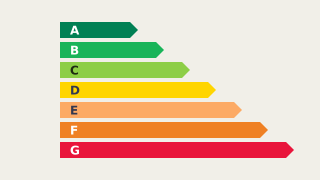

If you have compared your EPC with a neighbour's and wondered how two houses on the same street ended up in different bands, it is a fair question. It comes up on almost every job.
An EPC describes one specific property, assessed on one specific day, under one specific method. Change any of those and the result can legitimately change with it.
Two houses, one street, different ratings
Start with where the house sits in the row.
A mid-terrace home has two exposed external walls. The homes on either side are heated too, so very little heat escapes sideways. An end-terrace has three exposed walls. A semi-detached house also has three. A detached house has four.
That difference exists before insulation, glazing or heating come into it. Two houses built by the same builder in the same year, with the same windows and the same boilers, will not produce identical results if one is mid-terrace and the other is on the end.
After that, the usual causes:
- Floor area, extensions and layout. A rear extension changes the heated area and often the amount of wall for each square metre of floor.
- Wall, roof and floor construction. Solid brick behaves very differently from a filled cavity.
- Loft insulation depth, and whether it can actually be inspected on the day.
- Windows and glazing. Age and specification both matter, not just "double glazed".
- Boiler, heating controls and hot-water cylinder, including the cylinder's insulation type and thickness.
- Heat pumps, solar PV or other renewables.
- Lighting. Lamp counts and types in permanent fittings, with LED and fluorescent or CFL lamps recorded separately.
- When work was done. Two lofts converted a decade apart were built to different standards.
Any one of these can move a property within a band. Several together can move it across one.
Improvements that cannot be seen
This is the reason that surprises people most.
An EPC records what the assessor can verify, either by seeing it or through supporting evidence they can accept. Some improvements cannot be seen once finished: underfloor insulation beneath a fitted carpet, cavity fill in a wall that looks exactly like an unfilled one, insulation behind plasterboard dry lining.
When something cannot be confirmed, the method may require a default assumption based on the age and type of the property. That default can be less favourable than what is actually installed.
So two identical houses can diverge simply because one owner kept the installer's paperwork and the other did not. The assessor is not disbelieving anyone. An improvement cannot be recorded on the strength of being told it is there.
That is why we ask about documents before the visit. Certificates, guarantees, building control paperwork and commissioning documents can all help, where they exist and relate to your home. Our preparation and evidence guide covers what is worth digging out, and what to have ready sets out the access side.
Evidence changes what can legitimately be recorded. Paperwork does not guarantee a better result. It means a genuine improvement is less likely to go uncredited.
Old EPC versus new EPC
If you are comparing your new certificate with one from a few years ago, there is a further factor.
Since 15 June 2025, existing homes in England and Wales have been assessed under the RdSAP 10 method, which replaced the one used for older EPCs. RdSAP 10 remains the approved method under the government's current notice of approval.
RdSAP is a reduced-data version of the full SAP calculation. It is used for existing homes because the full construction data a new-build assessment relies on is rarely available for a home already standing. RdSAP 10 records some parts of a home in more detail and recognises newer heating and renewable technologies.
So older and newer EPCs may differ because the method, the data it asks for, the evidence available and the technologies it recognises have all moved on. That is a change in how a home is assessed and recorded. It is not a judgement that older homes or older building standards are now "bad", and it does not require you to modernise anything.
A new EPC should not be expected to reproduce an older certificate exactly, even if the property has hardly changed. Two points to be careful about:
- An older EPC was not wrong. It was produced under the rules that applied then.
- There is no published rule that RdSAP 10 raises or lowers ratings. The result depends on the property, its features, the evidence available and the method used. Anyone telling you the update always moves ratings one way is overstating it.
Our longer write-up of the change is in RdSAP 10: what changed in 2025.
Comparing EPCs? Compare the property details and the method used, as well as the letter.
Who actually decides the rating
This is the question we are asked most, so plainly:
The assessor's job is to survey the property, record its construction and systems accurately, and check what evidence can be accepted. That data then goes into government-approved software, which calculates the rating.
There is no field an assessor can edit to produce a requested result. If there were, the certificate would be worthless to the buyer, tenant or lender relying on it, and the assessor would be risking their accreditation.
What an assessor can do is make sure everything genuinely present is recorded and properly evidenced. That is the value of preparing well for the visit.
Can my EPC rating be changed?
We are often asked this by someone a point or two below the next band. A rating changes only when what is recorded changes, and what is recorded has to match the property and the evidence.
A rating can change when:
- A detail was recorded wrongly. A wrong wall type, floor area or heating system is an error. A lodged EPC cannot be edited, so the assessor lodges a corrected EPC and tells their accreditation scheme, which marks the old one "not for issue". Where a complaint finds the information was wrong, GOV.UK guidance says the correction should cost you nothing.
- Evidence turns up for something that could not be seen. Cavity fill, insulation under a floor or behind dry lining can be recorded on documents that relate to your home, such as a guarantee, a certificate or building control sign-off. A quote or plans to do the work do not count on their own.
- Part of the home could not be inspected. If the loft could not be reached safely, the method assumes its insulation from the age of the building. Safe access on a later visit lets the assessor record what is actually there.
- The home itself changes. After real works, a new assessment records the property as it then is. The newest EPC for a property is the valid one.
A rating will not change because the score is close to the next band, or because a different result would help a sale, a let or a mortgage. No assessor can add points. New evidence or access can also leave the score where it was, or lower it, because the assessor records what is there.
If you think a certificate is wrong
Start with the property details recorded on the certificate, not the rating. The rating follows from the data, so if the data is wrong the rating will be too. Check the recorded floor area, wall construction, roof insulation, glazing and heating system against the home you know.
Look for the word "assumed" next to an item. It means the assessor could not see it or find evidence for it, so a default was used for a home of that age and type. Those items are where paperwork can make the biggest difference.
| On the certificate | Compare it with | Evidence that helps |
|---|---|---|
| Total floor area | Your own measurements or a floor plan. Unheated garages and separated unheated porches or stores are left out of the EPC's figure | Measured plans |
| Walls | How the walls are built, and any cavity fill or wall insulation | A cavity wall insulation guarantee or installer's certificate |
| Roof | The depth of loft insulation, or insulation in a room in the roof | An installer's certificate, safe access to the loft |
| Windows | Single, double or triple glazing, and roughly when it was fitted | A FENSA or similar certificate |
| Main heating and controls | The boiler or heaters, thermostat, timer and radiator valves | The boiler installation certificate or manuals |
| Hot water | A cylinder and how it is insulated, or a combi boiler | The cylinder label or installation paperwork |
A floor area that looks smaller than your floor plan is not always an error. Our guide to EPCs, floor plans and surveys explains why the two figures can differ.
If something is wrong, raise it with the assessor who produced the certificate first. If that does not resolve it, contact their accreditation scheme, which is named on the certificate. The scheme must investigate, and where the information is wrong a new EPC is issued. If the complaint still cannot be resolved, the scheme refers it to an independent third party.
Differences between two EPCs are normal and are usually explained by the factors above. A difference is not, by itself, evidence that either certificate is mistaken.
Getting a certificate that reflects your home
Most of what makes a fair, accurate EPC is settled before the assessor arrives: access to every room, the loft and the meters, and paperwork for improvements that cannot be seen.
We cover all 32 London boroughs from our base in Stratford, with guide prices based on internal floor area and your exact quote confirmed before booking. See what a domestic EPC includes, the full guide pricing, or send us the address and we will come back with a price.
What it costs
An EPC is priced by the home’s internal floor area. Guide prices:
- Up to 40 m²Studios and compact flats£65
- 41–55 m²1-bedroom flats£75
- 56–75 m²2-bedroom flats and small homes£85
- 76–95 m²2–3-bedroom homes£95
- 96–115 m²3–4-bedroom houses£105
- 116 m² and overLarge homes, 4+ bedroomsfrom£120
A floor plan at the same visit saves up to £35. Same-day lodgement is £15 extra, and a next-day visit with the EPC lodged that day is £35 extra. Your exact price is confirmed before you book.
See every priceFrequently asked questions
Can an EPC assessor change my rating?
No. The assessor surveys the property, records its measurements, construction, heating, glazing and lighting, and checks any evidence they can accept. Government-approved software then calculates the rating from that data. There is no field an assessor can edit to raise or lower a score, and an assessor who offered to would be putting their accreditation at risk.
My EPC is one or two points below the next band. Can it be moved up?
Only if something recorded changes. If a detail was recorded wrongly, if you have evidence for an improvement that could not be seen, or if part of the home could not be inspected and now can be, the assessor can record what is really there and the score may move. Being close to a band boundary is not a reason on its own, and no assessor can add points.
Why is my neighbour's EPC higher than mine when the houses look the same?
Position in the terrace is one of the commonest reasons. A mid-terrace home has two exposed external walls where an end-terrace or semi has three, which changes heat loss before anything else is considered. Beyond that, insulation, glazing, heating, extensions, loft conversions and the evidence available on the day all vary between neighbouring homes.
Why is my new EPC different from my old one when nothing has changed?
Existing homes in England and Wales have been assessed under the RdSAP 10 method since 15 June 2025. It records some parts of a home in more detail and recognises newer heating and renewable technologies, so a new certificate will not necessarily reproduce an older one even where the property is unchanged. The older EPC was produced under the rules that applied at the time.
Can an EPC rating go down?
Yes. A new assessment records the home as it is, with the evidence available on the day, so a new EPC can come out lower than an old one. Once a newer EPC is lodged, it is the valid one for the home.
What if I think my EPC contains a mistake?
Check the property details recorded on the certificate rather than the rating alone, since the rating follows from the data. If something recorded is wrong, raise it with the assessor first. If that does not resolve it, contact the assessor's accreditation scheme, which is named on the certificate. Where the information is found to be wrong, a corrected EPC is lodged.
In your area
Ratings from EPCs lodged for existing homes, 01/01/2023 to 12/10/2026, from the GOV.UK register.
Sources
- A guide to Energy Performance Certificates for the marketing, sale and let of dwellings, GOV.UK (DCLG). Checked 22/10/2026.Features that cannot be seen need evidence; assumptions by building age where access is not possible; lodged data cannot be altered; the complaints route and a corrected EPC at no cost.
- RdSAP 10 conventions v12.2, conventions 9.02 and 9.03, BRE for MHCLG. Checked 22/10/2026.What counts as documentary evidence (intent to install does not, on its own); lodging a corrected EPC.
- The Energy Performance of Buildings (England and Wales) Regulations 2012, regulation 9(2), legislation.gov.uk. Checked 29/10/2026.An EPC is only valid if no other EPC for the building has since been entered on the register.
- Get a new energy certificate: if you're unhappy with the assessment, GOV.UK. Checked 29/10/2026.Complain to the assessor first, then to the accreditation scheme named on the certificate.
- RdSAP 10 specification (June 2026), BRE. Checked 22/10/2026.Party walls, sheltered walls and the heat loss perimeter.
- Methodologies for expressing the energy performance of buildings: notice of approval (24 March 2026), GOV.UK (MHCLG). Checked 22/10/2026.
- The Energy Performance of Buildings (England and Wales) Regulations 2012, regulation 9, legislation.gov.uk. Checked 22/10/2026.A newer EPC for the same building makes the older one no longer valid.
Crown copyright material is used under the Open Government Licence v3.0.
Was this guide useful?