
Please read before your EPC
These points help the visit run to time, and explain how quotes and EPC ratings work.
What to prepare
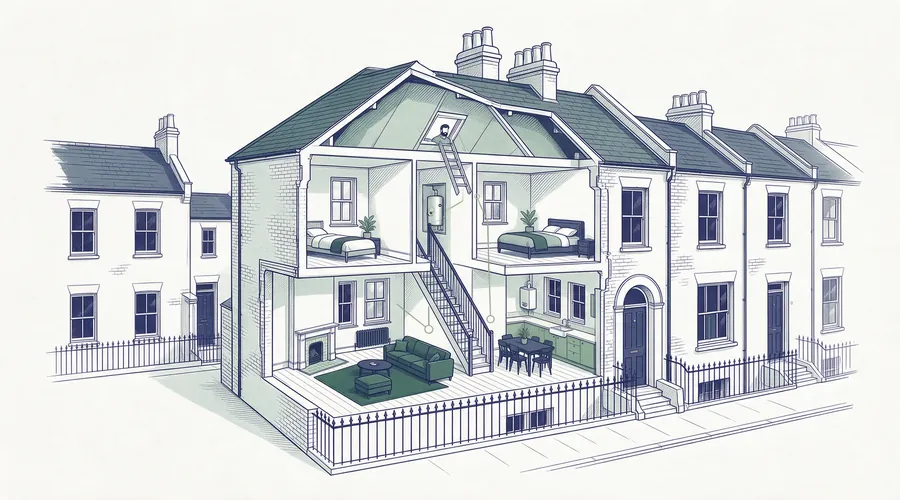
- Access
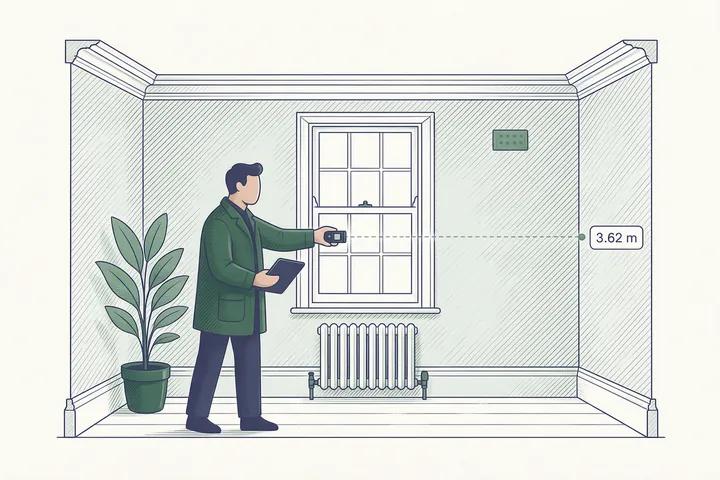
Every room, radiator and window, the loft hatch (if there is one), the boiler and hot water cylinder, the heating controls and the meters. Anything locked or blocked on the day can’t be recorded.
- Insulation evidence
If insulation is hidden, inside a wall, under a floor or under a boarded loft, your assessor can only record it from paperwork. Have the original insulation certificate or guarantee ready, with its certificate or guarantee number. It must show it’s for your home and how thick the insulation is: without the thickness it can’t be used. You can also send it to us by WhatsApp or email before the visit. Without it, the method has to use the default for the age of the home.
- Other paperwork, if you have it
Window certificates such as FENSA or CERTASS, heat pump paperwork showing the flow temperature, and solar panel or MCS documents. None of it is compulsory.
Important notes
- Tell us about every floor
Your price is based on the details you send. A flat on two floors (a maisonette), an extension or a loft room can change it, so mention them. Anything different on the day is agreed before the assessment begins.
More about quotes and property complexity - We can’t add a point or two
We record the property and the approved software works out the score. Nobody can adjust it by hand. Evidence of improvements you’ve made does count, so have it ready.
How your EPC rating is calculated - Different from next door, or your old EPC?
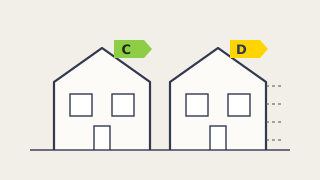
Existing homes have used RdSAP 10, a more detailed method, since June 2025, so an older EPC may not match. A neighbour’s can differ too, even in an identical home: their paperwork, when it was assessed, an end or mid terrace, or a different boiler can all change it.
Why your EPC may differ - Planning work to reach a rating?
Not everything that saves energy raises an EPC rating, and some upgrades count for much less than people expect. Ask us before you spend. We record the home as it is, so we can’t promise a rating before the visit.
What counts towards your rating - When your EPC is ready
Within 72 hours of the visit, or on the day of the visit if you chose same-day lodgement or a next-day visit.
What happens after the visit
What to have ready
Grouped by where things are, so you can walk round once. Tick things off as you go.
Your ticks are saved on this phone or computer only.
Documents and evidence that may help
Your assessor records what they can see and measure. Anything hidden, like insulation inside a wall or under floorboards, can only be recorded from paperwork that clearly relates to your home. None of it is compulsory. Put out what you have, and the originals if you can: they are preferred to photos or copies.
Windows and doors
- Installation certificates, such as FENSA or CERTASS
- Invoices from the installer
- Anything showing the installation date or the specification fitted, such as a window energy rating
- Paperwork for an insulated door, with its U-value or product reference
Insulation and building fabric
- Loft, wall or floor insulation records showing what was installed, with the certificate or guarantee number
- The insulation thickness: without it, insulation paperwork can’t be used
- Building Control completion paperwork for an extension or loft conversion. Planning papers alone aren’t enough.
Heating and hot water
- Boiler make and model: a photo of the data plate is usually enough
- Boiler installation or service paperwork
- Hot water cylinder details, including insulation type and thickness
- Heat pump installation or commissioning documents
- Design or flow temperature information, where you have it
Solar and renewables
- MCS documentation, where you have it
- Commissioning or installation paperwork
- System details, such as panel capacity in kWp or inverter details
- Home battery make, model and usable capacity in kWh
You can also send paperwork ahead by WhatsApp or email. Originals on the day are still best, and insulation paperwork must show the thickness.
What each document lets us record
More detail for each kind of paperwork, and what happens without it.
| If you have | We can record | Without it |
|---|---|---|
| FENSA or CERTASS certificate, Building Control certificate, or the maker’s guarantee for your windows | When the glazing was fitted | Dated from the glass itself if it can be, or recorded as unknown |
| BFRC window energy rating certificate, or the manufacturer’s data for your windows | How much heat your windows actually lose | Standard values for that type of glazing |
| Insulation certificate or guarantee for walls, floors or the loft, with its certificate or guarantee number, showing it’s for your home and the thickness. A cavity wall insulation guarantee counts. | Insulation that can’t be seen on the day | Treated as it was when the house was built, or as unknown for a boarded loft |
| Building Control completion certificate for an extension, loft conversion or converted building | The work as it was signed off. Planning papers on their own aren’t enough. | Only what can be seen on the day is recorded |
| Paperwork for an insulated front or back door, with its U-value or the maker’s product reference | The door as insulated | Standard values for the door |
| Boiler or heat pump commissioning paperwork showing it was designed for a low flow temperature | The low-temperature design | Flow temperature recorded as unknown |
| Solar panel paperwork showing the system size in kWp, or the MCS certificate | The size of your solar panel system | The panels may be left out, or estimated from how much roof they cover |
| Home battery paperwork showing the make, model and usable capacity in kWh | Your battery’s real capacity | 5 kWh assumed for each battery |
| Solar diverter (sends spare solar power to your hot water): its make and model in writing | The diverter | The diverter can’t be entered |
| Air tightness test certificate from an ATTMA or EAS member, with no major changes to the home since | Your home’s measured air tightness | A standard value |
| Bills showing you get LPG at mains gas prices | Your LPG priced as mains gas | Standard LPG prices |
Why evidence matters
The method only lets an assessor record what they can see or prove. Paperwork has to clearly relate to your home and show the work was done. Plans or quotes for work, on their own, don’t count, and nor does a verbal assurance on the day.
Evidence changes what can be recorded, not what the rating will be. It means a real improvement is less likely to be missed. The full preparation and evidence guide
Quotes, ratings and older EPCs
The full answers to the questions we’re asked most.
Your quote and property complexity
We price from the details you send before the visit. If the home turns out to be materially different, for example a bigger floor area, a different property type, or an extension or loft conversion that wasn’t mentioned, we’ll tell you before we start. We then agree a revised price with you or reschedule, and you’re free to cancel at no charge at that point. We never change an agreed price without speaking to you first, so there’s no surprise on the invoice afterwards.
How your EPC rating is calculated
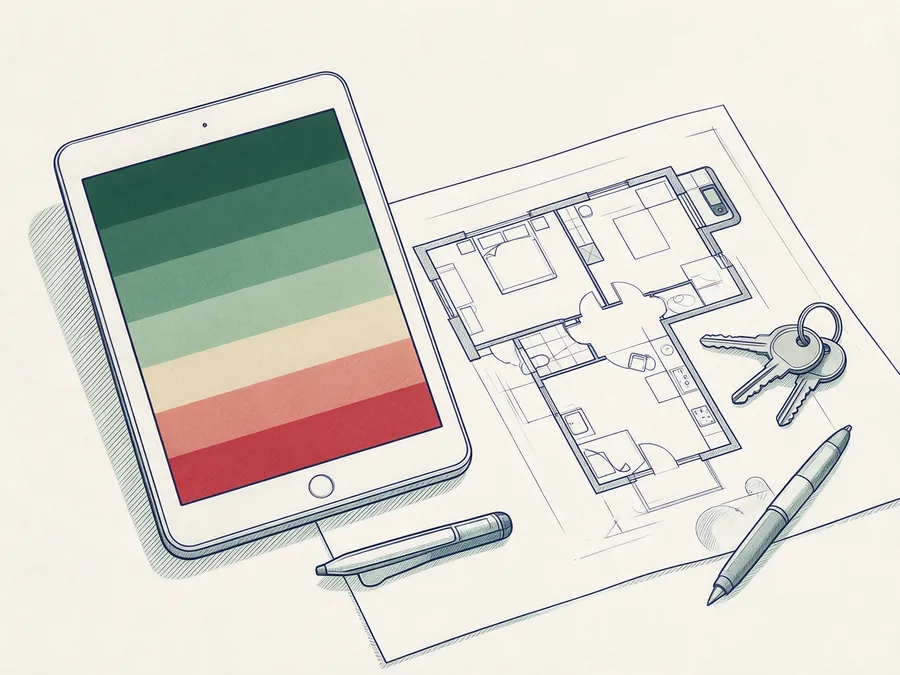
Your assessor surveys the home, records how it’s built and heated, checks the evidence and enters it. Approved software then calculates the rating using the government’s method. No assessor can raise or lower a score to order. If they could, the certificate would be worth nothing to the buyer, tenant or lender relying on it.
That includes us. We can’t change your rating, before or after the visit, and we can’t lodge a different one because it was expected or needed for a sale, a let or a mortgage.
What we can do is make sure everything that’s really there gets recorded and backed by evidence. Have your paperwork out on the day, or send it to us before the visit: the documents section shows what helps.
What counts towards your rating
Many homeowners renovate and then find the rating hasn’t moved as far as they hoped. Two things are worth knowing:
- Not every change counts towards an EPC rating. The EPC measures a fixed set of things, so work that makes a home nicer, or even saves energy, may not move the score.
- The higher bands are much harder to reach. Going from C to B takes far more than moving between the lower bands, and it usually needs solar panels.
Some examples of what does and doesn’t count:
- Loft insulation at both the floor of the loft (the joists) and the roof slope (the rafters): only the joist insulation is counted, so the rafter insulation adds nothing to the rating.
- Underfloor heating run from the same boiler as your radiators: both are recorded, each with the same boiler, but the rating follows the boiler far more than how the heat is delivered, so the underfloor only moves it a little. With a heat pump, if radiators heat half the floor area or more, only the radiators are counted.
- Hidden insulation only counts with paperwork that shows the thickness.
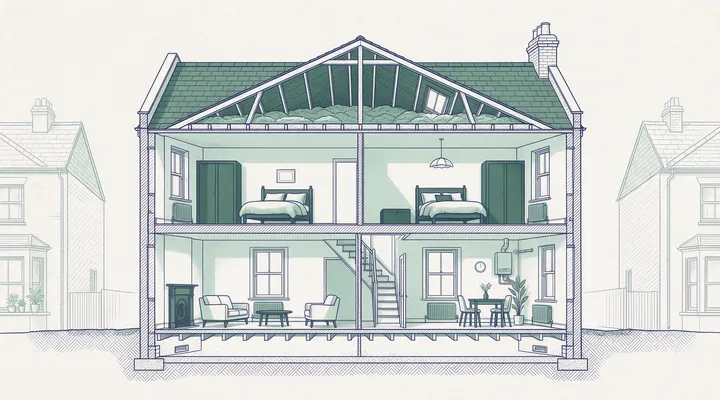
- The loft: if there’s no loft hatch or other way in, it’s recorded as no access and the method uses the default for the age of the home. So if your loft has no insulation at all, the rating may be better with no access to the loft, where the default for its age is used, than with access, where none is recorded. If you can get into the loft, your assessor measures the insulation that’s actually there. A hatch that’s there but can’t be opened on the day is recorded as access with the insulation unknown, not as no access.
These rules are set by the government’s method, not by us, and we can’t change them, so we can’t promise a particular rating before the visit. If you want to know where you stand first, an EPC Pre-Assessment gives you the rating without lodging it, and the EPC Improvement Plan puts the upgrades in order for your home.
Why your EPC may differ
Ratings are specific to each home. Two homes that look the same from the street can score differently, for good reasons:
- Position in the terrace: a mid-terrace home has fewer outside walls than an end-terrace or a semi
- Floor area, layout, extensions and loft conversions
- How the walls, roof and floor are built and insulated
- Loft insulation depth, and whether the loft can be inspected
- The age and type of the windows
- The boiler, heating controls and hot water cylinder
- Heat pumps, solar panels and batteries
- Lighting
- Paperwork: one home had evidence of its insulation or windows, the other didn’t
- When it was assessed: before RdSAP 10 in June 2025, or before a later update to the method’s rules
- The method used, and what was recorded at the last assessment
- Occasionally, a mistake on one of the certificates
Comparing EPCs? Compare the property details on each certificate, not just the letter. Why EPC ratings differ between similar homes
The method changed in June 2025: RdSAP 10
Existing homes have been assessed under the updated RdSAP 10 method since 15 June 2025, replacing the approach used for older EPCs. RdSAP is a reduced-data version of the full SAP calculation. It’s used for existing homes because the complete construction data a new-build assessment relies on is rarely available for a home that’s already standing.
Older and newer EPCs may differ because the method, the data it needs, the evidence for the home and the technologies it considers have all changed. That’s a change in how a home is assessed and recorded. It isn’t a judgement that older homes or older building standards are now “bad”, and it isn’t a requirement to modernise anything.
The standards have moved on too. Heating, insulation and glazing have improved a lot in the last decade, and the method’s assumptions, such as fuel prices and how each system performs, are updated to match. So a home that hasn’t changed since its EPC five or six years ago can score lower today, because it is now measured against newer standards. It doesn’t always go down: it depends on the home.
So a new EPC shouldn’t be expected to reproduce an older certificate exactly, even if the home itself hasn’t changed much. An older EPC reflects the method and information available at the time; a current EPC assesses the home using today’s approved method.
That doesn’t mean an older EPC was automatically wrong, or that RdSAP 10 will always produce a higher or lower rating. The result depends on the home, the features present, the evidence available and the method used. RdSAP 10 is the approved method for existing homes in England and Wales under the current GOV.UK notice of approval.
Older EPCs can also hold different assumptions or recorded information. If an older certificate looks inconsistent with the home, compare the property details on it rather than the letter alone. Genuine errors are possible, though they shouldn’t be presumed. What changed in RdSAP 10 · GOV.UK notice of approval
When your rating comes back
The questions we’re asked most once the rating is in, answered straight.
On the day
Your assessor photographs and measures each room, records the heating system, insulation, glazing and lighting, and reads the meters. There is no testing, no mess and nothing invasive.
- We arrive in your booked time slot
The time window we agreed when you booked.
- Outside first
Photos of the front, back and sides of the home.
- Room by room
Measuring each room and photographing the windows, radiators, heating controls and lights.
- Loft, boiler, cylinder and meters
Insulation depth in the loft, the label on the boiler, the meters.
- A few quick questions
Such as whether the EPC is for a sale or a let, and anything about the home we can’t see.
- Payment
Due when the assessment is done, by cash, bank transfer or card.
No mess and nothing invasive. You don’t need to follow us round. If parking near you is tricky, let us know beforehand and we’ll plan around it.
Who needs to be there
You or your representative, at the property at the booked time. That means an adult who can give us access to every part of the home, including the loft and any locked rooms.
Tenanted property?
Please let your tenants know about the visit and give them proper notice. They’ll need to let us in and have the rooms easy to reach. If that’s difficult, send us their contact details and we’ll arrange it with them.
After the visit
We send you a draft of your EPC to check. Once you’re happy with it, we lodge the certificate on the official GOV.UK EPC register and send you the link as soon as it’s live.
- StandardReady within 72 hours of the visit
- Same-day lodgement or a next-day visitReady on the day of the visit
A lodged certificate can’t be edited, so the draft is your chance to flag anything that looks wrong.
Changes, fees and payment
- Need to change or cancel the time?
- It’s free with at least 24 hours’ notice. With less than 24 hours’ notice, a £25 fee may apply to cover travel and time. Message us on WhatsApp as early as you can.
- What if something can’t be reached on the day?
- Your assessor records what they can. Return visits needed because of access issues outside our control are charged at £25 per visit. If the boiler or other heating can’t be inspected and there’s no paperwork for it, the EPC can’t be finished until we can get to it.
- How do I pay?
- Payment is due when the assessment is done, unless we’ve agreed otherwise in writing. We take cash, bank transfer and card.
- Do I need to tidy up?
- No. We only need to reach things: rooms, radiators, windows, the loft hatch (if there is one), the boiler and the meters.
The full wording is in our terms.
Was this guide useful?